According to Face-Reading Traditions, Which Facial Features Are Believed to Affect a Husband’s Luck?
Physiognomy holds that certain facial features—such as a prominent nose, downturned mouth corners, bulging eyes, sharp cheekbones, and a broad forehead—can indicate a tendency to bring misfortune to one’s partner. To gauge how strong this tendency may be in a woman, practitioners first examine the palm to understand innate nature and personality, then analyze facial features to assess acquired traits. Together, these reveal the interplay of inborn character and learned behavior. In other words, if a woman’s palm suggests misfortune but her face does not, she may be somewhat stubborn or extreme in her views yet avoid harming others because she can restrain herself. If both the palm and face point to misfortune, however, trouble is more likely. Below are several facial signs traditionally believed to suggest a tendency to bring misfortune to a partner, for your reference.
1. Downward Slanting Eyes
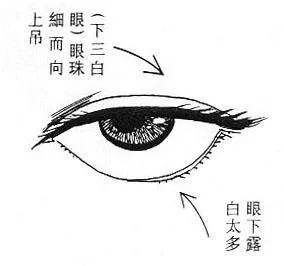
It is no longer the case that women must stay home cooking and caring for children. Today, many women are independent and excel in their careers, often outpacing men. Still, competition in society can be harsh, and once caught up in it, it can be hard to step back. Resisting such pressures takes considerable willpower. For this reason, excessive career ambition is not always seen as beneficial for women in physiognomy, as it may be thought to diminish their inherent feminine qualities.
Ambition is often read in the eyes. A type known as “downward slanting eyes” features pupils that look slightly lifted, exposing a larger area of white below, which can leave an uneasy impression.
Women with downward-slanting eyes are said to be proud and dismissive of others, with a self-centered streak. They are often talented and fiercely driven to achieve their goals; if they do not succeed, they may resort to questionable means. Women with this eye shape are advised to cultivate their character; otherwise, they may face serious marital or relationship challenges in midlife, leading to deep emotional turmoil and increasingly extreme behavior.
2. Prominent Cheekbones Indicate Misfortune to Partners
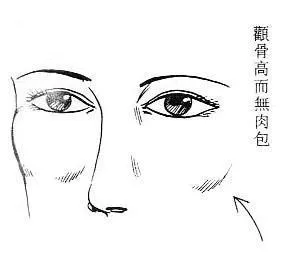
To judge whether a woman may bring misfortune to her partner, practitioners often look first at the cheekbones and then at the nose. Women’s cheekbones are read differently from men’s: while high, full cheekbones are considered favorable for men, high and sharply prominent cheekbones in women have traditionally been linked to misfortune for their partners, because this feature relates to authority. In the past, women wielding power were frowned upon, so such features were seen as unfavorable for a spouse. Although modern society is more accepting, many still resist situations where a wife overshadows her husband, especially if he feels powerless and unheard—an obvious sign of being “dominated.”
The idea that prominent cheekbones signal misfortune stems from the observation that women with this feature tend to have a rougher demeanor and a strong, forceful personality. Their husbands are often weaker or more timid; if they marry a strong-willed man instead, conflicts can flare quickly, making a harmonious relationship hard to maintain.
3. Knife-like Nose Indicates Misfortune to Partners
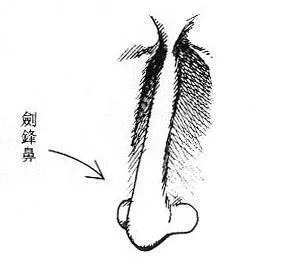
Having discussed cheekbones, we turn to the nose. Cheekbones can be categorized as high, large, full, or prominent, which can be hard to distinguish in practice. Evaluating the nose is often more straightforward.
What does a “misfortune” nose look like? A woman with a “knife-like nose” has a sharply defined bridge with visible bone structure, tight skin, and little flesh, resembling a blade—called a “sword-like nose” in physiognomy. Women with such noses are said to be emotionally distant, strong-willed, and stubborn, often attracting negativity. If paired with high cheekbones and a pointed chin, they are thought to be harsh, critical, and materialistic.
The nose is considered the “husband star,” making it a key feature in women’s physiognomy. A knife-like nose combined with high cheekbones is a classic sign of a woman who may bring misfortune to her partner, potentially bringing challenges to her husband.
Another sign is a broad face with a small nose. Women with wide faces and small, low noses are said to have a “sunken husband palace,” suggesting weaker fortune for their husbands. Men with poor career prospects or midlife setbacks are thought more likely to marry such women. That said, these women can be very devoted and loyal to their spouses.
4. Bumpy Nose
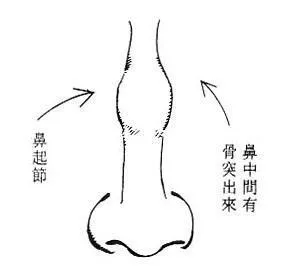
Women with bumpy noses tend to be stubborn and quick-tempered. Traditionally, it is said that women with this feature are prone to marital difficulties. Since the nose is the “husband star,” it carries special weight in women’s physiognomy, and a bumpy nose can indicate potential misfortune for a partner. The reasoning is that a woman who frequently loses her temper with her husband and behaves unreasonably is unlikely to enjoy lasting harmony in marriage.
In reality, many women with bumpy noses do not experience marital failure. If a woman with a bumpy nose also has well-defined features and a full forehead, significant marital problems are less likely. A full forehead often signifies smoother, more fortunate life circumstances, while clear features suggest intelligence and charm—qualities that can help maintain harmony despite a strong personality.
5. Thick Brow Bones in Women
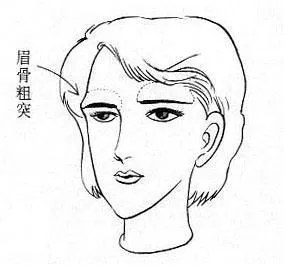
At a gathering, I noticed a woman with particularly prominent brow bones—thick and protruding—giving her a commanding presence. I couldn’t help but worry for her husband, as women with such features are often said to bring misfortune to their partners, making it hard for their husbands to assert themselves.
Physiognomy suggests that men with prominent brow bones tend to be forceful and assertive, sometimes acting on impulse and provoking conflict. Finding this feature in a woman is less common, as most women have flatter brow bones and a softer nature. When a woman’s brow bones are pronounced, it can lend her a more masculine, strong-willed character, making impulsive behavior and offending others more likely—much as it can in men.
I later learned that her personality matched this reading: before marriage, she had serious conflicts with her future mother-in-law, nearly preventing the wedding. Her husband, once robust, became frail shortly after they married, which seemed to confirm my impression.
6. Crab-like Eyes
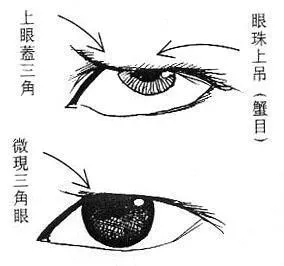
From time to time you may notice eyes that are distinctly triangular, with single eyelids and slightly puffy lids, where the pupils look lifted and the lower whites show. This striking shape is called “crab-like eyes” in physiognomy. While crab-like eyes in men are concerning, women with this eye type should not be underestimated either; in discussions of “misfortune to partners,” women with crab-like eyes are often included.
Women with true crab-like eyes are rare, but many have a milder version, or “slightly crab-like eyes.” In these cases, the upper eyelids droop a little, forming a small triangle, and the pupils are slightly lifted, revealing some lower whites. Such individuals may lean toward self-interest but are not necessarily malicious. With early self-cultivation, they can soften this eye shape and improve their fortunes.