Are There Facial Features That Predict a Shorter Lifespan?

Many of us might have witnessed situations where people in their twenties or thirties pass away for various reasons. In our society, such premature deaths are often considered tragic. People in this age group are typically in the prime of their lives, enjoying some of their best moments, yet due to various uncontrollable factors, they leave this world too soon. Some might not have had the chance to marry or have children, leaving their parents to bear the heartbreak of outliving them. This is undoubtedly one of life's greatest tragedies.
So, how can we examine the features of individuals with shorter lifespans through a physiognomic lens? Below, the I Ching physiognomy expert will share insights on which facial features may be associated with a shorter lifespan. There are numerous traits linked to short-lived faces, but due to space constraints, we'll discuss just a few today. Future articles will cover more aspects, so stay tuned to the I Ching physiognomy expert!
First, Eyebrows
In physiognomy, eyebrows are known as the "Longevity Officer." Therefore, well-defined eyebrows, resembling the character "一" in regular script or slightly crescent-shaped, are considered indicators of a longer lifespan. A person with one or two long eyebrow hairs, a wider distance between their eyes, nose, and mouth, and a healthy complexion, is likely to have greater longevity.
Second, Philtrum
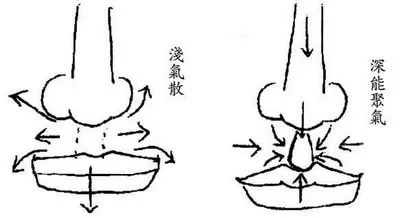
The philtrum reflects a person's health, while the mouth signifies their fortune and longevity. In physiognomy, a short and flat philtrum is a negative sign. If the distance between the nose and mouth is barely visible and the philtrum lacks angles, these are strong indicators of a shorter life.
Thin lips and a small mouth also suggest a potentially shorter lifespan. Such individuals may have low psychological resilience, are prone to negative thoughts during tough times, and might even consider self-harm. This makes it challenging for them to maintain an optimistic view of life, naturally diminishing their prospects for longevity. A tendency towards suicidal thoughts is quite apparent.
Third, Ears
Ears have a significant correlation with lifespan. Well-defined ear outlines and plump earlobes, ideally with a slightly reddish or pink hue, indicate a strong likelihood of living beyond 85 years, possibly reaching a full century.
Fourth, Yintang (the area between the eyebrows)
A wide and bright Yintang is often a sign of longevity. On the other hand, a narrow or dull Yintang might imply a greater likelihood of encountering accidents and misfortunes throughout life.
Fifth, Three Regions of the Face
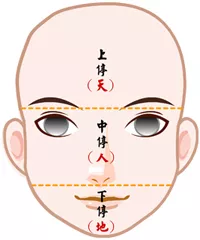
Balanced proportions across the three facial regions (ideally one-to-one-to-one) are generally considered indicators of longevity. If the lower region of a person's face is well-developed, even if the proportions aren't perfect, they are still viewed as having a long-lasting appearance. Conversely, if the middle region is overly developed while the other parts are short, or if the upper and lower regions are long but the middle is short, it suggests less likelihood of experiencing longevity and enjoying the presence of grandchildren.
Sixth, Chin
The chin, referred to as the "Earth Pavilion" in physiognomy, represents a person's fortunes in later life. A full chin (the so-called "Earth Pavilion is square and round") often signifies longevity. Conversely, deficiencies in this area are generally considered unfavorable for a long life.