What Facial Features Indicate a Man May Harm His Wife and Children?
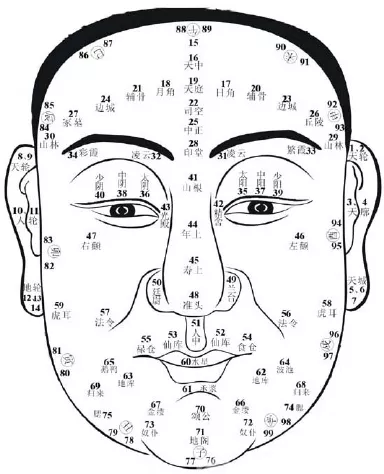
The "Three Lives Comprehensive Guide" states: "For men, a strong fate brings blessings, while a weak fate brings disasters. For women, a weak fate brings blessings, while a strong fate brings disasters. Softness is the foundation of blessings, while harshness leads to punishment." This aligns with the theory of yin and yang, as well as the ideas of hardness and softness. If a woman is strong and a man is weak, this is called a reversal of yin and yang; violating yin-yang principles is believed to bring misfortune. Below, Dr. Zheng outlines traditional physiognomic features said to indicate a man who may harm his wife, for your reference:
1. High Cheekbones and Heavy Hegu Bone
A face with prominent cheekbones and an irregular shape is said to indicate that a man will lose three wives, while a woman will harm three husbands.
2. Deeply Sunken Canthus and Dry Crow's Feet
In physiognomy, a woman's nose represents the "husband star," while for men, the outer corners of the eyes—commonly referred to as the canthus—represent the "wife palace." This area is thought to reflect a man's marital fortune: a full canthus suggests a supportive spouse, while a sunken canthus points to marital misfortune. It is said: "A low canthus leads to a lifetime as a groom," meaning a man with a low or excessively sunken canthus is likely to face marital strife and will struggle to remain with one wife for life.
3. Horse Eye Shape Harms Wives
The hallmark of horse eyes is loose eyelids and protruding eyes with moist tear ducts. Those with horse eyes are said to face misfortune, harming their wives and children and leading a life of toil.
4. Goat Blade Breaks Family Pattern
Lines crossing the center of the forehead indicate separation from ancestors; horizontal lines on the bridge of the nose, known as wife-harming lines, suggest the loss of a spouse—one line indicates one loss, three lines indicate three. Thus, having a goat blade line on the forehead along with lines on the nose signals severe marital strife, making it difficult to find a partner, and even if one marries, there will be pain and conflict.
5. Lone Peak Stands Tall, Four Tails Hang Low
A "lone peak standing tall with low hanging tails" describes arched, sparse eyebrows with tails drooping to the canthus. People with such eyebrows may live comfortably yet are said to face severe marital discord. They may experience multiple separations and ultimately have no biological children, resorting to adoption.
6. Central Mountain Strong, Eyebrows Split into Hairline
The "central mountain" refers to the nose, which represents a man's wealth. A nose that is not full and lacks a prominent tip suggests financial difficulty. It is said: "A large face with a small nose leads to a lifetime of hardship," which in turn may cause the wife to suffer. Ideally, the central mountain should be high and fleshy for prosperity. A man's nose also represents the palace of his wife and concubines; a sharp, bony nose points to a man who is critical and often complains about his wife, with a stingy attitude toward money. If the bridge of the nose is especially prominent, it is thought to increase the likelihood of harming a spouse.
Additionally, the area between the eyes, known as the mountain root, should not be sunken. A weak bridge indicates poor health and marital misfortune. It is said: "To know if a man will harm his wife, just look at a low mountain root."
7. Triangular Eyebrow Arches, Constantly Furrowed Brow, Always Crying
Thick, triangular eyebrow arches are said to indicate a tendency to harm wives. If the brow is often furrowed, it suggests early-life injury and loneliness, with wives and concubines also facing harm. The worst case is a perpetually tearful expression, which is believed to bring harm to wives and children and lead to loneliness in old age. It is said: "With tearful eyes, one only sends loved ones away."
8. Moles on the Mountain Root Indicate Harm to Wives and Children
In face reading, the nose is mapped to a person's lifespan, from the center of the forehead at thirty-six years to the right side at forty-five. The nose is divided into two sections. A black mole on the mountain root indicates harm to wives and children; a mole on the side of the nose points to great misfortune; a mole on the upper part suggests few brothers; a black, round mole in the center of the forehead indicates great fortune and auspiciousness.
9. Slanted Philtrum Indicates Harm to Wives and Children
The philtrum resembles a river valley, symbolizing the flow of life and the palace of children. A clear, deep philtrum indicates longevity and many children, while a short, shallow one suggests a short life and loneliness.
A philtrum that appears as a single line is not unusual; it indicates a small heart and stinginess.
If it is slanted and not prominent, one will certainly harm wives and children in youth.
10. Deep and Wide Tear Ducts Indicate Harm to Wives
A woman with a mole at the corner of her mouth is said to harm her husband; a man with a black mole under his eyes is said to harm his children. Full lower eyelids indicate many children. Deep, wide tear ducts indicate harm to wives. Moles on the cheek suggest harm to wives, and irregular eyebrow growth suggests harm to wives and children.
Additionally, physiognomy also states:
Hairless thighs and arms, straight eyebrows, and a thin, bony nose indicate someone most unfortunate; even ancestral blessings will be squandered, leading to poverty. Disordered head patterns indicate poor character, prone to crime and legal trouble; even if they do not harm wives and children, they will see family decline and live in loneliness. In physiognomy, the most undesirable aspect is the "gentleman’s face": a man with such a face will not live long, while a woman with such a face will face misfortune; only monks and hermits are exempt, as they are inherently solitary. Eyebrows that are broken and flow against the natural direction, extending onto the forehead, suggest a person who once held office but brought trouble upon himself, ultimately losing land and repeatedly harming several wives, leading to disaster.
From the above, traditional physiognomy holds that features such as moles in the eyebrows, heavy brows pressing down on the eyes, dry and sunken crow's feet, lines at the outer eye corners, a smaller left eye, a blue hue at the lower left eye corner, black moles under the eyes, a low mountain root, moles on the mountain root, spots, horizontal lines, prominent cheekbones, exposed teeth, a protruding Adam's apple, heavy hegu bones, a grayish-white complexion, and sheep-like facial patterns are all signs of harming wives and children. Of course, a person's fate—including marriage and relationships—is a complex system and is not determined by any single feature. It is essential to view these aspects holistically and critically.