What Does a "Lucky" Face Look Like?

Image source: Pixabay
Hello everyone, in this edition of our facial features series, we'll dive into a popular topic: the "blessed face."
"You can tell at a glance that this person is fortunate," is a phrase many of us have encountered. But what does it truly mean to have good fortune? Is it a round face or a chubby appearance? The answer isn't that simple. Today, we'll examine this through the lens of physiognomy.
The Essential "Ears"
When we talk about "good fortune," we must first mention the ears. Ears are the facial feature most associated with the concept of "blessing."
Generally, excellent ear features are described with keywords like bright color, height, size, thickness, and well-defined contours. The more of these qualities an ear possesses, the better it is considered.
Among these features, the ones directly linked to "good fortune" are the earlobes, their shape and color, and the overall size of the ears.
Starting with the earlobes, even those unfamiliar with physiognomy probably know the saying, "big earlobes bring good fortune." This is mostly true, as earlobes are believed to be connected to a person's blessings and luck, particularly concerning prosperity in later life.
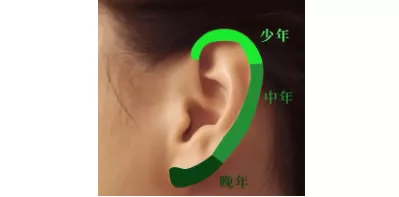
In contrast, individuals with very thin or small earlobes, or those who lack them entirely, tend to struggle with "enjoying blessings." They may worry excessively, find it hard to relax, and often can't indulge in life's pleasures... However, this doesn't necessarily relate to their actual success or wealth.
While earlobes can symbolize blessings and protection, it's important not to judge them solely based on size or shape.
For example, many individuals with thicker earlobes might enjoy good fortune related to food and drink, yet this feature also means they must be mindful of their health, especially with conditions like cardiovascular disease and wealth-related illnesses, such as high blood pressure, high cholesterol, and high blood sugar.
Additionally, large earlobes may lead to a more easygoing disposition. People with small ears and large earlobes might seem more introverted and conservative, appearing delicate and refined but lacking motivation and energy, feeling lethargic... Yet, they still enjoy good fortune and luck.
PS: Earlobes are somewhat akin to the mystical "yin zhi" lines under the eyes. Those who lead virtuous lives and perform good deeds tend to have thicker and larger earlobes, reflecting increased blessings.
Typically, ears with bright colors are considered lucky, with white ears lighter than the face deemed the best. As the saying goes, "ears whiter than the face, fame spreads far and wide," indicating great wealth and renown. Pink or slightly red ears are also favorable, but ears that are too red or black may signal hard work. Specifically, if the facial skin tone is normal but the ears are black, it suggests a life of toil and fatigue.
The size of the ears should relate to the overall facial shape. If they seem disproportionately large or small, it's usually noticeable. Larger ears often signify abundant kidney energy, good physical strength, and vitality. If ears are also wide and thick, this suggests wisdom and aspirations, as well as the physical capability to pursue ideas.
In today's world, good health is a blessing. Those with abundant energy, compared to those easily fatigued or weak, naturally have more time and energy to enrich their lives. Hence, it's essential to take care of one's body. Additionally, ear features not only influence fortune but can also hint at a person's character and temperament.
For instance, people with large, white, thick, and drooping ears, regardless of their actual personality, possess an inherent kindness and uprightness. Naturally, kind-hearted individuals receive good karmic rewards, which are reflected in their ear features... It's a fascinating cycle.
Moreover, blessings and misfortunes often intertwine. Even those with good ears should be mindful of not overindulging in pleasures; otherwise, even the thickest blessings cannot withstand excessive squandering.
Forehead and Chin: The Beginning and the End
The forehead and chin are another pair of features closely tied to "good fortune."
The forehead is assessed by the height from the eyebrows to the hairline. This affects a person's fortune from ages 15 to 30 and influences their talents, character, and worldview, reflecting their family background, childhood, and even ancestral accumulation.
Thus, the forehead's features influence fortune primarily by revealing a person's "initial setup" in life.
As for what makes a good forehead, a full and wide forehead without depressions or a shriveled appearance is ideal, aside from integrating various facial features which we've discussed before.
Many from wealthy families or who had happy, comfortable childhoods may not have remarkable features elsewhere but often possess broad and full foreheads. This foundation from their original background not only aids early fortune but lays a firm foundation for overall growth (in terms of perspective, living conditions, financial support, etc.).
The chin reflects late fortune, complementing the forehead by assessing a person's later life circumstances.
A full servant palace (as shown in the image below) indicates good financial status and late wealth. If it's sunken or has poor skin or numerous wrinkles, it might suggest a more challenging and laborious later life.
In the past, the servant palace was used to assess household servants. Although the concept of servants is outdated, wealthy families often have private nannies and drivers, which isn't much different. Thus, the servant palace can still represent a financial reservoir, reflecting one's assets.
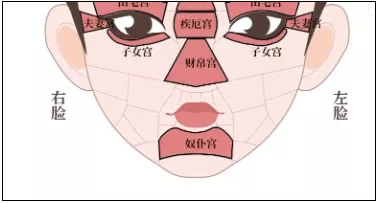
Overall, when examining the chin, or "earth palace," we focus on its shape. It can be categorized into square, pointed, or round chin types.
Pointed chin: While often sought after by celebrities and influencers, it usually signifies family instability and may negatively affect marriage, increasing the likelihood of divorce or late marriage.
However, pointed chins with flesh or a double chin can enhance auspicious attributes, indicating wealth (particularly in real estate).
Square and round chins are deemed beneficial features. The legendary "earth palace square and round" represents stability in family matters and smooth late fortune, foreshadowing future growth.
Today, a sharp chin with a defined jawline is a desirable feature, often referred to as the "delicate youthful V-face." However, comparing oneself to online images or excessively altering the jawline could harm one's future fortune.
The saying "a full heaven and a square earth" is well-known. If someone meets these criteria, it suggests good early fortune and the ability to enjoy blessings later, leading to a well-balanced life filled with fortune.
The Importance of the "Eyes": Inner Fortune
The spirit, especially the eyes, plays a key role in physiognomy and can be considered separately from external features like eye size, shape, or eyelids. How crucial are the eyes? Simply put:
Physiognomy emphasizes "the importance lies in the eyes" because they reflect a person's inner world and thoughts. Bright and lively eyes can significantly counterbalance other facial flaws, while dull eyes can detract from an otherwise attractive appearance, diminishing one's overall impression.
When observing someone, bright, expressive eyes suggest intelligence and nobility. Such individuals often possess clear goals, recognize others well, and maintain an optimistic outlook—traits that are indeed precious.
Furthermore, bright, lively eyes filled with determination and certainty indicate a strong inner conviction, showing they are not lost. Conversely, dull eyes reflect a lack of motivation and certainty about the future, which, despite one's appearance, can indicate a degree of stagnation in their fortune.
Facial Shape and Harmonious Features
A large round face is ideally complemented by relatively large eyes, nose, mouth, and ears. Conversely, a small face pairs better with small features. Therefore, one shouldn't simply assume "a big face means good fortune" or "a small face lacks fortune."
Physiognomy stresses the importance of harmonious combinations. A large face shouldn't have disproportionately small features, or it could appear out of balance, such as "a large face with a small nose" or "a strong nose with weak ears," leading to a less favorable impression.
Conversely, a small face shouldn't have oversized features (sometimes excessive cosmetic surgery results in "alien faces" or "snake spirit faces," where too much jawbone reduction creates an imbalance).
In essence, feature sizes should align with the overall facial structure.
Moreover, facial features that are purely attributed to specific elements—whether metal, wood, water, fire, or earth—are typically seen as higher status indicators, often linked with good fortune and wealth. Many of these interpretations transcend traditional physiognomy theories.
For instance, individuals with a pure wood attribute often possess slender and elongated body shapes and facial features, yet these too carry noble characteristics, hinting at good fortune.