Exploring Facial Fortune: A Comprehensive Analysis of Small Lines and Their Impact

This article presents an in-depth exploration of "facial lines."
Facial lines aren't generally seen as dominant facial features, especially in today's world influenced by beauty filters, leading them to be often overlooked. However, there's an old saying: "While the lines may seem insignificant, their influence on fortune is profound," reflecting one's luck and destiny. Hence, they should not be disregarded during facial analysis.
In general, a face without distinct lines is considered fortunate, as it tends to avoid many negative "landmines" associated with problematic lines. A popular expression states, "A clear and clean face is valuable," and looking flawless is undeniably desirable. For those with facial lines, their specific locations and types warrant careful analysis. Therefore, I will classify facial areas to provide a comprehensive overview of "auspicious and inauspicious facial lines."
Forehead Lines
Forehead lines are typical with aging, but if they appear in youth or adolescence (before 30), they often suggest a life filled with challenges and changes. This isn't inherently indicative of good or bad fortune; some individuals may have faced early life hardships, while others might have experienced studying away from home.
Initially, let's talk about horizontal lines on the forehead:
Three straight horizontal lines on the forehead are considered favorable, known as "Three Blessings Lines," signaling wealth and longevity. However, these may also indicate early life changes or challenges, but overall, it's a positive sign.
If there are three or four lines with ends curving downward, these are "Crescent Lines," representing health and longevity. These lines are seen as auspicious, and individuals having them often lead serene and fulfilling lives with pleasant temperaments.
If there are three or four lines curving upwards at both ends, they are called "Wild Goose Formation Lines," symbolizing immense success and achievement, though they are quite rare in reality.
A single straight horizontal line, known as a "Crown Line," may suggest loneliness and could affect romantic relationships negatively, but it might also connect someone to the spiritual. Conversely, a wavy single horizontal line, termed as a "Wavy Line," is regarded as inauspicious, indicating early struggles and toil.
If there are more than five lines on the forehead, they are generally seen as inauspicious (except those due to aging). Fine, fragmented lines suggest frequent setbacks with little reward for effort; chaotic lines imply a propensity to attract conflict.
Regarding vertical lines, the most common type is the trio called "River Lines." If they are short, they're acceptable, but long ones are unfavorable, suggesting a bad temper, strained relationships, or feelings of oppression and sadness, with unexpressed internal struggles.
For more than three vertical lines, it doesn't signify good or bad fortune; it simply indicates a stubborn personality. The upside is a strong sense of responsibility and dedication to hard work; the downside is excessive stubbornness and a lack of adaptability.
A noteworthy line on the forehead is the "Suspended Needle Line"—a vertical line in the center of the forehead. This line is usually seen as unfavorable, suggesting an extreme personality with weak family bonds, potentially leading to difficulties in career or love life.
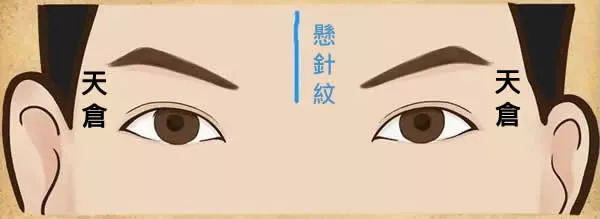
The most unfavorable scenario is when the Suspended Needle Line points directly towards the middle of the face (the area related to life and longevity), indicating potential harm to health and lifespan.
However, the Suspended Needle Line can also grant certain "military" traits, making individuals well-suited for military or law enforcement careers.
Eye and Ear Lines
The area beneath the eyes is often referred to as the "Palace of Offspring" or "Palace of Fortune," connecting lines here to matters of progeny and blessings.
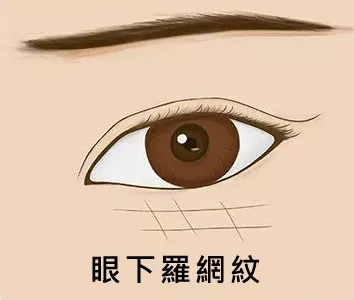
Lines beneath the eyes, such as crosshatches, net-like patterns, or scars, are considered unfavorable, hinting at possible difficulties with children, weak relationships, or disharmony. A dark, dull appearance in this area can intensify these issues.
Conversely, the well-known "Yin Zhi Line," a slightly horizontal line under the eyes, symbolizes blessings and good fortune, often bringing unexpected luck and protection. If the skin beneath the eyes is yellow and moist, it enhances the favorable nature.
This line is somewhat mystical; those developing it often exhibit noble character through virtuous acts and charity. I view it as a celestial "medal" for those of noble disposition.
Note that the Yin Zhi Line lies beneath the eyes, while crow's feet are at the corners. The former is very fortunate, whereas the latter suggests potential labor and relationship issues; they are fundamentally different.
Moreover, if a man has numerous chaotic lines at the corners of his eyes, it greatly increases the likelihood of complex romantic relationships and love troubles.
(Once again, crow's feet that appear with age are normal and aren't considered inauspicious.)
Now, let's discuss ear lines—although rare and hard to spot, if present, they can augment life’s smoothness but might also result in increased travel and changes.
Facial Center Lines
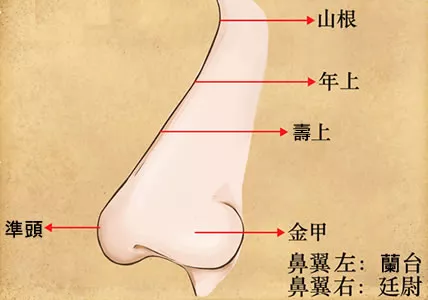
In facial analysis, the nose is a key feature, and lines on the nose can vary in implications based on their exact locations and appearances.
Lines at the tip and the area of life and longevity are especially undesirable, with tip lines being the most inauspicious, associated with potential accidents or blood-related issues. Lines in the area of life and longevity have a milder effect, possibly causing temporary fortune stagnation.
Horizontal lines at the nose's root impact men significantly. "The Essentials of Physiognomy" states that one line signifies one wife, whereas two lines indicate two wives.
However, if the nose possesses three clean horizontal lines, it's deemed favorable, representing longevity.
In the philtrum area, the presence of lines is generally undesirable as it can adversely affect one's descendants.
Horizontal or diagonal lines in the philtrum can weaken familial bonds, and a single vertical line may indicate challenges in having children.
Lower Face Lines
Moving on to lines on the lower face—first, the nasolabial folds, a common concern for beauty enthusiasts.
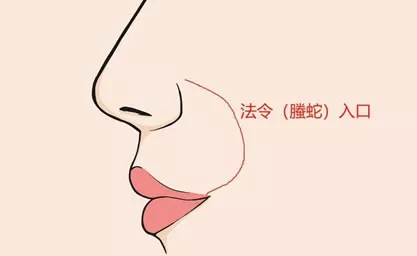
Whether nasolabial folds are favorable or not often depends on when they manifest. Generally:
Prominent nasolabial folds appearing in youth (before 30) suggest early hardships, requiring self-reliance due to insufficient parental support.
If these folds appear in middle age (30-50) and are normal in shape, they're likely just a natural phenomenon without harmful implications.
Nasolabial folds appearing in old age (after 50) are called "Longevity Belt," which is a positive sign indicating longevity.
Different nasolabial fold states (referring here to those appearing typically in the 30s and 40s) provide special insights.
Deep and long nasolabial folds are favorable, significantly benefiting one's career and health (those with such folds should be careful about cosmetic procedures to remove them, as that would be a loss);
Folds varying in length or with breaks indicate career fluctuations and instability, reflecting an unpredictable temperament;
Short nasolabial folds can attract negative people, while also making limbs prone to injuries;
Very long folds stretching to the mouth corners, visually appearing as if folding ends are "entering" the mouth (not literally entering): this condition, known as "Snake Entering the Mouth," is considered very unfavorable, suggesting dietary or digestive issues and potentially unpleasant later-life conditions.
Next, let's introduce the "Cheng Jiang Point," an acupuncture point in the center of the lower lip, familiar to traditional Chinese medicine enthusiasts.
In physiognomy, deep lines at this point can mean susceptibility to "water-related disasters," especially near large water bodies or during boat travels, warranting caution to prevent accidents.
Lines on the tongue are usually favorable, denoting intelligence and good fortune with food and wealth;
However, lines at the tongue's base are generally seen as unfavorable, possibly hindering property acquisition and disrupting family harmony.
In summary: Physiognomy reflects an individual's innate characteristics alongside changing fortunes, influenced by thoughts and actions. It is a dynamic process; engaging in good deeds and character cultivation can positively alter one's appearance, diminishing negative lines and fostering favorable ones. This ongoing transformation highlights true physiognomy.
Practicing physiognomy isn't about blind "fatalism," but rather understanding oneself through facial examination, recognizing and addressing flaws, and striving for self-improvement. Cultivating one's heart and character is essentially about nurturing one's outward appearance.