Silver-Tongued or Tongue-Tied? An Analysis of Eloquence's Dual Nature

Image source: Pixabay
Welcome to this edition of "Reading Faces to Understand People." Today's focus is on "speaking"—how eloquence and speech-related issues can be reflected in facial features.
The phrase "good at speaking" strikes me as neutral. Articulate, logical, and coherent speech defines one kind of good speaking, while being overly smooth-tongued and persuasive illustrates another. It's clear, however, that the former is advantageous, while the latter can be problematic.
This article will explore both positive and negative perspectives to provide readers with points of reference and comparison. Feel free to adjust these insights to your situation and draw inspiration as needed.
Important pre-reading note: The traits described here are detailed and should be assessed comprehensively; judgments can't be made based on a single feature alone. Facial features must be considered in context. Please use this information sensibly.
Positive "Good Speaking Features"
As stated in the "Great Treatise on Human Relations": The mouth is the key to language and the gateway to right and wrong. According to face reading's "Five Palaces" definition, the mouth is the palace of expression, influencing breathing, eating, eloquence, reputation, and culture. Thus, when discussing "speaking," mouth features are undeniably significant.
The saying "a big mouth has more opportunities" is likely familiar. Here, "more opportunities" suggests boldness, generosity, good fortune, and eloquence. In physiognomy, those with larger mouths generally excel in "speaking," as it conveys openness.
Of course, a large mouth is just one prerequisite for being "good at speaking." It's often combined with other factors: for instance, if someone with a large mouth smiles widely and appears relaxed, they tend to be generous, conversationally skilled, and socially adept. Individuals with rosy lips and large, white teeth are often persuasive, using their eloquence to gain benefits or resolve conflicts.
A person's speaking ability can also be assessed by the shape of their mouth. Square mouths, upward-curving mouths, and "pearl-holding" mouths are particularly telling:
Square Mouth: The upper and lower lips should be equal in size and thickness. Ideally, a slightly larger, thicker mouth that is round when open but square when closed indicates intelligence, logic, excellent eloquence, and respect from others, aiding in achieving success.

Upward-Curving Mouth: When not smiling, the corners of the mouth slightly lift like a crescent moon, with rosy lips and white teeth. Individuals with this mouth are often optimistic and positive, easy to get along with, and possess social skills, making them generally likable.
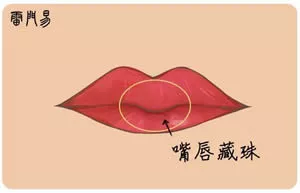
Pearl-Holding Mouth: Featuring a fleshy protrusion in the middle of the upper lip just below the philtrum, resembling a pearl, this mouth shape indicates a chatty, likable person who excels in conversation, fostering relationship-building.
Generally, large mouths with pronounced corners are a sign of articulateness and pleasant speech.
Apart from mouth features, other facial characteristics can reveal a person's speaking abilities:
Those with large ears tend to be confident and optimistic, often making them effective speakers who articulate their ideas well. Ears that are high and slightly forward-leaning suggest early success and a strong presence, further enhancing speaking abilities.
People with bright, lively eyes, especially those that appear "sparkling," not only have good social ties and are popular but often display high emotional intelligence. They typically excel in socializing and conversation without being overly introverted.
Moreover, a relaxed facial structure—where the distance between the eyebrows and eyes isn't too close, and the features aren't "crowded"—signals an open-minded personality, free of excessive worries, and usually more articulate than those with crowded features.
Those with crowded features might not show poor speaking skills, but they often have complex thoughts and can feel restrained, fearing mistakes and embarrassment in expression, which can hinder social interactions.
Individuals with naturally raised eyebrows, eyes, and mouth corners, along with a generally relaxed expression, are often extroverted, enjoy humor, and thrive socially.
Negative "Good Speaking Features"
Now that we've covered the positive, let's look at the negative "good speaking features." As highlighted, since "words come from the mouth," it's essential to first examine mouth characteristics.
Firstly, if the mouth is noticeably protruding and the lips cannot fully close, even at rest, resembling a person blowing air, it's known as a "Blowing Fire Mouth" in physiognomy. This mouth shape is a classic case of "trouble arising from the mouth," where individuals often love to talk and are overly competitive in conversation, unintentionally offending others.
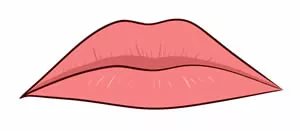
Another type is the Capsized Boat Mouth. Unlike the upward-curving mouth, this mouth has corners slightly turned down, creating a sorrowful appearance. Such individuals may speak negatively or nitpick, potentially frustrating others.
Note: While someone with a Blowing Fire or Capsized Boat Mouth might not intend harm, they may mistakenly believe their bluntness is refreshing. In real interactions, refining one’s speech is crucial, so self-awareness is essential.
Individuals with thin upper lips and sharply defined mouth corners are often good speakers but may display inconsistencies between words and actions, especially among men. This typically pairs with traits like pointed ears or a thin and pointed lower face.
Interestingly, men with these features often match contemporary aesthetics admired by many women—good-looking, charming with words, and quick with conversation. It's wise to keep your guard up and not be misled by flattery!
Pertaining to mouth features, take note: regardless of mouth shape, if the mouth and philtrum are misaligned, their expressions are likely to have negative aspects. Even those with the "good mouth shapes" mentioned can exhibit this. In severe cases, it may lead to deceit or sinister intentions, showing a "split personality," while milder cases may involve discrepancies between thoughts and words or speaking without thought.
The following summarizes negative "good speaking" features in other facial areas—
- Teeth: Protruding, large gaps, or sharp teeth can indicate that someone might exaggerate or distort facts, especially when paired with pointed ears.
- Visible nostrils combined with an open mouth that doesn't close properly indicate a tendency to boast, show off, or seek momentary verbal victories.
- Dull eyes and a habit of looking away suggest evasiveness with deeply seated thoughts. Combined with thin, upward-curving lips, this can lead to deceit, with inconsistencies between words and intentions.
- "Orange peel" skin and triangular eyes can indicate selfishness and indifference. These individuals might not excel in speaking but are adept at self-justification and evasion, especially if they have sparse teeth.
- Those with sparse, short eyebrows, protruding teeth, and a crooked mouth while speaking tend to exaggerate or speak without thinking, making truth discernment difficult, so caution is advised when dealing with them.
Images and text: Lei Men Yi