Qingya Jushi: Why Is Showing Skin and Wearing Tight Clothes Seen as Inferior?
The study of physiognomy dates back to the Spring and Autumn period and gained significant prominence during the Han Dynasty. In this era, a person's fate was often believed to be influenced by their appearance. For example, Cao Cao was viewed as a cunning tyrant during turbulent times, whereas Liu Bei was considered to exhibit imperial qualities. This suggests that physiognomy was a well-established practice by that time.
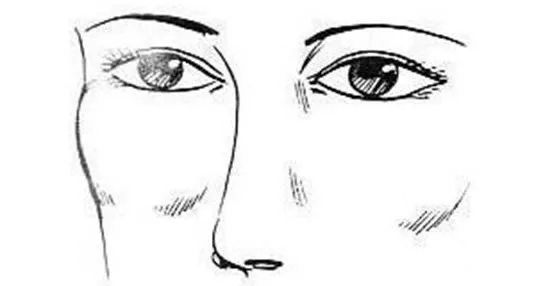
Today, modern interpretations of these ancient beliefs often mistakenly assume that judgments about appearances were based solely on beauty or ugliness. While this may hold true in popular culture, true experts in physiognomy evaluate individuals based on specific criteria. According to these principles, tight, exposed skin is seen as a negative trait for both men and women, often associated with detrimental effects on their partners or a shorter lifespan.
Why does this line of thought exist? It's not as simple as saying that prominent bones and minimal body fat lead to a shorter life. Such an explanation might align with the Western concept of unfalsifiability, but the principles at play here delve into areas that Western theories do not fully encompass.
The notion of luck can be compared to subtle energy shifts in nature, which significantly impact the collective and individual mindset. During periods of high luck, people often experience positive emotions and tend to overlook problems. In times of low luck, emotions can intensify, resulting in impulsive anger.
Throughout history, the rise and fall of individuals, communities, and regions are fundamentally driven by collective consciousness. When a ruler is in good spirits, their people tend to enjoy peace. Conversely, erratic behavior in leadership can lead to a nation's downfall.
Individuals with tight, exposed skin and sunken cheeks—characterized by prominent cheekbones and a pronounced nose—are often less tolerant and prone to extreme actions. Over time, a person's emotions can shape their physical features. A study of twins separated at birth, with one living a wealthy life and the other in poverty, demonstrated significant differences in their appearances after thirty years. Therefore, features analyzed in physiognomy can reflect a history of personality development. Consider the impact if an extreme individual obtains power and their fortunes change.
These scholarly insights are drawn from the lived experiences of the Chinese people. For skeptics, asking the partners or family members of individuals with such traits may provide clarity.