Reevaluating the Saying: "Should Someone with Pockmarked Skin and Green Whiskers Not Be Considered for Engagement?
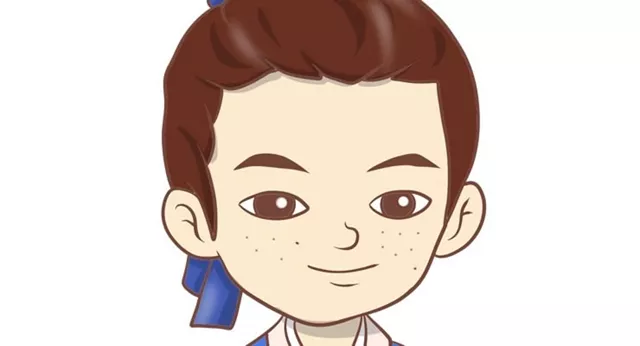
As the saying goes, "It's easy to defend against an open attack, but hard to guard against a hidden arrow." So, who are the people that can potentially harm us and should not be deeply trusted? Liu Heng's commentary on the book "Ma Yi Shen Xiang" offers insights into recognizing and utilizing facial features to help us seek benefits and avoid harm, preventing troubles before they arise. The commentary illustrates that "calculating too much leads to mistakes, and overthinking makes everything difficult," emphasizing the treacherous nature of some individuals. We must be cautious and maintain our distance from deceitful people while staying true to our principles.
1. A high nose indicates a solitary person, often dying far from home.
A high nose describes a person with a small face and a prominent nose, where the nose stands out alone. This feature signifies someone who is solitary and disconnected from others. If the nose is high and sharp, it suggests a harsh and narrow-minded person who is unwilling to consider others' opinions. Such individuals are often scheming and cannot remain in one place for long, as they tend to experience failures wherever they go. Their narrow-mindedness results in a lack of social connections, leading to a lonely existence away from home.
2. A hooked nose and hawk-like eyes indicate a treacherous companion.
A hooked nose is a symbol of insidiousness, while hawk-like eyes hint at a malicious nature. Characteristics of a hooked nose include a high bridge that curves outward, thin nostrils, and a downward-curving tip like a hawk's beak, with little flesh on the bridge and tip. Liu Heng states: "A hooked nose pulls in but does not let out." Hawk-like eyes are small and round, with a cold and ruthless gaze, indicating a cunning and treacherous person who should not be underestimated.
3. A pockmarked face and a lack of flesh on the cheeks are warning signs; a hunched back indicates deceit.
A pockmarked face is characterized by pits from untreated smallpox in childhood. Liu Heng notes: "Nine out of ten pockmarked people are charming; without pockmarks, one lacks allure." Individuals with such features tend to be greedy and self-centered, harboring resentment and a strong desire for revenge.
In men, a lack of facial hair, resulting in a plain face, indicates a deficiency in yang energy and an excess of yin. Such individuals are often secretive, skilled in duplicity, and may present one face while showing another behind your back, making them difficult to guard against. A pale complexion can also suggest a ruthless nature; no matter how much kindness you show them, they remain ungrateful and heartless.
A lack of flesh on the cheeks indicates someone without prominent cheekbones, giving a triangular shape with a pointed chin, often called a "fox-like face" in folklore. This suggests a lack of integrity and a tendency to prioritize personal gain over loyalty. They may be friendly when in power but will abandon you once they lose their status.
The term "hunched back" has two interpretations: First, as Liu Heng describes, it refers to a "water snake waist," where the upper body is long and the legs are short, indicating a person skilled in deceit and manipulation, who acts without gratitude and is driven solely by self-interest. Second, a hunched back can refer to a hunchback, who may be emotionally fragile yet resilient, skilled in calculations, and often operates outside the norm. Engaging with such individuals can lead to unintentional offenses, and they will not hesitate to retaliate, making it difficult to defend against their hidden malice.