Facial Asymmetry: What Areas of Life Can It Impact?
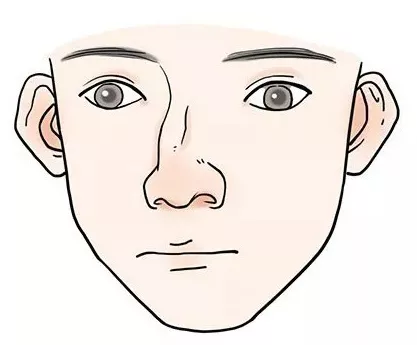
A user posed this question, which likely mirrors a common real-life situation. While similar analyses have been discussed in past articles, here I'll briefly summarize the impacts of various forms of facial asymmetry.
First, let's consider eye misalignment. When someone's eyes often look sideways rather than directly at others, it suggests an abnormal psychological state. These individuals may be secretive and untrustworthy, often with hidden motives. In physiognomy, this implies a cunning nature, making them unreliable.
Next is eyebrow asymmetry. When one eyebrow sits higher than the other, it often denotes a discrepancy between a person's outward demeanor and their true intentions. Such individuals might present one persona in public while behaving differently in private, suggesting a dual personality.
Then there's nasal misalignment. The nose is associated with mental clarity; a straight and wide nose indicates a righteous heart. However, an extreme mindset can lead to distortions or protrusions, especially as one reaches middle age, potentially signaling significant crises. Why focus on middle age? A sunken forehead hints at early fortune, disordered eyebrows reflect mid-life fortune, and a prominent nose indicates late middle age. Different facial features relate to various life stages. Those with dishonest intentions may have a crooked nose, symbolizing treachery, much like a wolf in sheep's clothing.
Fourth is mouth misalignment. Crooked lips imply excessive, nervous chatter, which ultimately leads to inadequate communication. If the jaw is misaligned, it suggests a lack of career prosperity, making it challenging to maintain a livelihood throughout life.
A person's thoughts and emotions can manifest as habitual changes in their facial features. For example, someone frequently impulsive may have flared nostrils; absent that habitual emotional response, their face wouldn't show such changes. Alterations in one's appearance stem from internal habits that shape one's destiny, while facial features reflect these traits.
If a person's inner emotions don't manifest on their face, they often achieve noteworthy success, indicated by the brightness of their eyes. Physiognomy doesn't determine fate solely through appearance; the quality of one's character is separate from physical attractiveness. However, it connects to one's features, suggesting that fate is appraised through the heart.
When the heart improves, the appearance naturally shifts, leading to corresponding changes in destiny. The extent of these changes hinges on the strength of one's efforts towards self-improvement. Ancient Chinese scholars recognized this principle over two thousand years ago, yet many today remain unaware. They wrestle with their fate, often dismissing it as outdated superstition due to ignorance, or helplessly wishing for external forces to change their destiny.