Evaluating Your Wealth Potential Through Feng Shui Principles
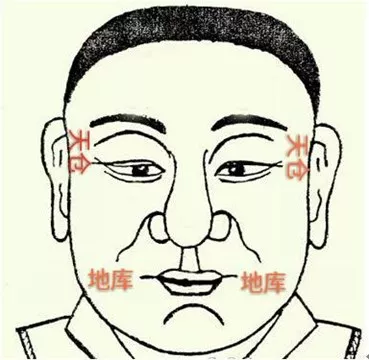
In ancient times, warehouses were used to store grains and treasures, and there is also a kind of "warehouse" on a person's face (known as "Tian Cang" and "Di Ku"), which symbolizes both innate and acquired wealth. According to physiognomy, if a person's face is broad and symmetrical, with both Tian Cang and Di Ku being full and favorable, it signifies a life of wealth and success. Below, we provide a detailed explanation of the locations and meanings of Tian Cang and Di Ku.
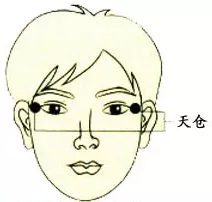
1. What is Tian Cang?
Tian Cang refers to the area around the temples, located between the ends of the eyebrows and the hairline. In traditional physiognomy, Tian Cang signifies wealth inherited from ancestors or accumulated during one's youth. Those from affluent families can enjoy wealth from a young age, which is why it is referred to as "Tian Cang," indicating wealth granted by heaven.
1.1. Tian Cang Should Be Full and Abundant
When observing a person, if their Tian Cang is full and abundant, it typically indicates that they come from a wealthy family, with parents or grandparents who have amassed significant wealth. Such individuals often have no concerns about necessities and can inherit family assets. For men, a prominent Tian Cang is advantageous, while for women, a smooth and full Tian Cang is ideal. Women with a broad Tian Cang not only benefit from ancestral blessings but are also likely to find a good husband, leading to a fulfilling love life and marriage.
1.2. Tian Cang Should Not Be Sunken or Scarred
Tian Cang should not be overly protruding, sunken, or marked with scars, blemishes, or prominent injuries. Otherwise, it indicates a lack of inherited wealth from ancestors or parents and difficulty in accumulating wealth quickly during youth. Generally, individuals with a sunken Tian Cang have poor luck with benefactors, meaning they must rely solely on their own hard work and effort to achieve success, leading to a more challenging and laborious life.
If the Tian Cang is sunken and the bridge of the nose is also low, it suggests that the person's overall foundation is weak, limiting their ability to start their own business and resulting in ordinary jobs with basic responsibilities. Such individuals may not excel in investments and financial management, so they should be particularly cautious in this regard.
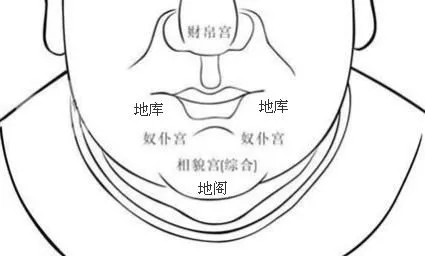
2. What is Di Ku?
Di Ku is located at the jaw area, representing wealth accumulated through one's own efforts in middle and later life, as well as real estate ownership. To assess if a person possesses wealth, especially in terms of real estate, one should examine Di Ku. Di Ku reflects the accumulation of assets and conveys stability. If Di Ku is full and abundant without scars, blemishes, or visible injuries, even without inherited wealth, one can still achieve prosperity through hard work and intelligence, becoming wealthier with age. However, if this area is sunken, it indicates that the person's financial situation may not cover daily expenses, making it difficult to own property and often leading to an unstable lifestyle.
"The fate of life and death is predetermined, while wealth and nobility are granted by heaven" embodies the Chinese notion of accepting fate and being content with one's circumstances. Each person's physiognomy is unique; the wealthy have their own distinctive features, while the impoverished can also be identified through their facial characteristics. Tian Cang reflects wealth given by parents, while Di Ku represents the results of one's hard work. A combination of favorable timing, location, and human relationships, alongside innate luck and personal effort, is essential for achieving one's career and accumulating wealth.