Evaluating Fortune by the Height of the Mountain Root
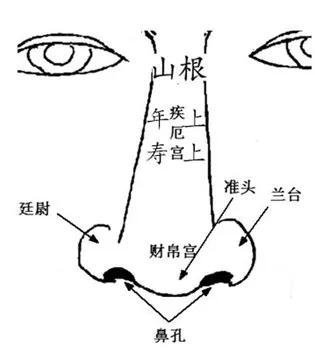
In physiognomy, the section between the eyes, beneath the "Yintang" (the space between the eyebrows), and where the nose begins to rise is called the "mountain root." Alongside the "year palace" and "longevity palace," it's referred to as the "disease and disaster palace." This area connects the Yintang with the official fortune palace above and the wealth palace below, primarily ruling over a person's health and illnesses. It also signifies the onset of one's fortunes in middle age, with particular influence noted at the age of 41.
The "mountain root" symbolizes the base of a great mountain, where the mountain represents the nose, and the nose is linked to earth. The nose's root is the mountain root, while its bridge is the foothill. The mountain should ideally be towering, flowing with continuous energy; thus, the mountain root should not be broken, sunken, or absent. If the mountain root is full and free of blemishes or marks, it signals a positive start to middle age. Conversely, if it's sunken or blemished, obstacles and health problems may arise, potentially leading to unfavorable fortune in the years that follow, despite a prosperous youth.
I. The Mountain Root Should Be High, Not Low
In facial analysis, the mountain root represents a person's willpower and fighting spirit. Therefore, individuals with a high mountain root are more likely to achieve fame compared to those with a low one. They also tend to possess strong self-discipline, self-esteem, and a firm will. If the mountain root is prominent, forming a straight line with the Yintang and the bridge of the nose, it is termed a "straight nose," indicating extraordinary nobility and significant career success, earning respect and admiration. However, if the mountain root is bony without flesh, the individual may have strong willpower but lack ethical values and possess a temper.
For ordinary individuals, even if the mountain root is not particularly prominent, a broad and full one is acceptable. Those with a full mountain root tend to have robust health, strong disease resistance, harmonious marriages, abundant wealth, and good fortune, often benefiting from favorable ancestral influences. The worst scenario is a mountain root that is too low, leading to poor fortune, a lifetime of hard work without much help from others, and an unsatisfactory marriage.
There's a saying that "a low mountain root indicates an early loss of the mother," especially around the age of 41. One must pay attention to their own health and be mindful of their mother's well-being. If the mountain root is low and the eyes appear sunken, or if the nose bridge is crooked, there may be dangers at 41 that should not be ignored. A mountain root with a significant angle, resembling a break, is prone to disasters, and if clear horizontal lines appear, the risk increases. Additionally, the height of the mountain root affects the height of the nose bridge; a higher nose bridge suggests stronger self-esteem and difficulty accepting others' opinions, while a lower bridge implies a lack of confidence and reliance on others. A low mountain root combined with a low nose bridge, forming almost a straight line, indicates an unfavorable marriage where even if the couple doesn't separate, they may still face challenges.
A narrow mountain root can suggest an unfavorable marriage, as such individuals tend to be self-centered, feel exploited, and struggle financially. Those with a low and narrow mountain root may lack long-term vision, focusing only on immediate gains, often missing opportunities. Individuals with a broad and flat mountain root may have weak willpower paired with strong competitiveness, leading to weak fortune and difficulty relating to others. Between the ages of 31 and 40, they may experience health, wealth, and career difficulties. A flat mountain root in a group setting often lacks independent status, making them reliant on others with little personal insight.
II. The Ideal Color for the Mountain Root is Yellow and Moist
The optimum color for the mountain root is yellow and moist, indicating smooth progress in various aspects of life. The mountain root should avoid colors like blue, black, or green; a dark blue or black color is inauspicious and might hint at hidden health issues and significant internal stress. Many individuals with heart disease exhibit a white color in the mountain root area, especially with heart yang deficiency. Blood stagnation might present as grayish-blue or dark purple, signaling insufficient blood supply to the heart. A bluish mountain root might suggest seizure risk, while a dark one implies energy stagnation. Blue coloration might indicate stomach issues, while red might signal liver and gallbladder problems. A red mountain root could signify blood-related issues, legal troubles, injuries, diseases, or family difficulties, with milder cases involving gossip. If it turns black, it indicates declining health; if dark blue or black appears in the year palace, it suggests internal organ problems, while in the longevity palace, it indicates health issues from external environmental influences.
III. The Mountain Root Should Not Have Breaking Lines
The Yintang is situated between the eyebrows, while the mountain root is between the eyes. Blemishes or horizontal lines between the Yintang and the mountain root indicate a lack of ancestral support, requiring self-made success. This may also lead to numerous life challenges and even legal troubles. Vertical lines on the mountain root may suggest difficulties conceiving, leading to adopting children or needing adoption oneself; caution is needed to avoid sudden disasters, particularly car accidents. A vertical line extending from the Yintang to the nose's tip is known as the "five horses dismemberment line," indicating potential calamities.
Horizontal lines on the mountain root may lead to financial losses around ages 35 or 36. For men, this might indicate their wives undergoing abdominal surgery around this age; for women, it may signal romantic troubles and disasters. Regardless of gender, around age 41, legal disputes or financial losses may arise. One horizontal line indicates one danger, two lines indicate two dangers, with deeper lines suggesting greater risk and shallower lines indicating lesser risk. If horizontal lines exist on the mountain root alongside a broken or marked life line in the palm, it may imply a car accident; if the life line is intact, the risk is minimized.
Individuals with chaotic lines on the mountain root might experience marital strife, with numerous lines indicating a tough life, family breakdown, and poverty. Mixed vertical and horizontal chaotic lines suggest a detachment from ancestral ties and a struggle for survival, leading to perpetual poverty. Women may not be ideal primary partners. Individuals with a low and chaotic mountain root may lack confidence, easily become discouraged, and have difficulty recovering from failures.
IV. The Mountain Root Should Not Have Moles
A mole on the mountain root suggests potential harm or conflict; women might remarry, and men might take another wife. A mole near the mountain root implies a life of struggle, poor marriage, and susceptibility to stomach issues. A mole on the mountain root may lead to romantic rivalries; if it's black, it could indicate harm to one's spouse or children. If a mole is present at the mountain root, combined with a dull complexion, it suggests weakness, frequent illness, and poverty. Men might be easily tempted by women, while women could be deceived by men, leading to partners often being sick and burdened with troubles. If the mountain root is low and has moles or horizontal lines, it signals a life filled with disasters, with higher car accident risks around ages 40 or 41.