Assessing a Person’s Life Success and Failure Based on Nose Shape
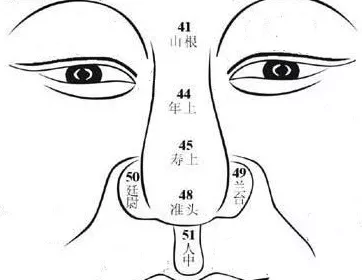
In physiognomy, the nose—called the “Shen Bian Guan”—is associated with both the “Disease Palace” and the “Wealth Palace.” It is said to reflect a person’s financial luck, health, and fortunes in middle age. The nose’s appearance is believed to have a major influence on one’s life, often shaping success or failure. Below is how different nasal features are interpreted.
1. Root of the Nose
The root of the nose sits at the top of the nasal bridge. Those with a high root tend to be ambitious and eager to make money, sometimes chasing quick riches—an impulse that can lead to setbacks. If they build their careers steadily, step by step, they can achieve solid success and accumulate wealth. By contrast, a low root suggests a more practical approach to money—content with enough and free of excessive desire—which often leads to a happier life.
2. Nasal Bridge
The nasal bridge, also known as the “Disease Palace,” is said to govern fortune and misfortune. To gauge someone’s life path, practitioners often look at the bridge of the nose. An ideal bridge is moderately high, straight, and connects smoothly to the root. People with such features usually enjoy favorable career and financial luck; with effort, they can attain status and wealth—succeeding in both career and money.
When the bridge is too high or too low, fortunes tend to be less favorable. A very high bridge often indicates lofty ideals but weak practicality, a tendency to chase fast money and dream of overnight wealth—expectations that rarely pan out. A very low bridge can point to limited ambition and self-confidence, focusing only on basic needs and making it hard to achieve significant career growth.
Dark moles or scars on the bridge suggest not only weaker luck but also a life of hard work, often with health concerns. An uneven bridge can signal obstacles, with finances that rise and fall—earning well at times but spending heavily, making it difficult to save.
3. Nose Tip
The tip of the nose, called the “Zhun Tou” in physiognomy, is also known as the “Wealth Palace.” A favorable tip is full, rounded, clear of blemishes or moles, and has a healthy tone. Such individuals typically enjoy steady financial luck, take a practical approach, and are skilled at earning, accumulating wealth through their smarts. Dark moles or depressions on the tip suggest weaker financial luck, possible losses, and the risk of being misled in investments, leading to shrinking savings.
4. Nose Wings
The nose wings—also called the left and right “Golden Armors,” or “Lan Tai” and “Ting Wei”—are best when full and well-defined. Thick wings indicate good saving habits and the ability to build a nest egg; thin wings can point to weaker money management. Moles on the wings suggest financial losses, especially around ages 49 and 50. If the nostrils are very large and the wings are thin, it indicates poor financial luck and difficulty saving, with money flowing out faster than it comes in.