Understanding Zangbi: An Analysis of Facial Features
The nose is made up of the root, bridge, wings, and tip (the nostrils), and is the highest feature on the face. It functions as the sensor among the five senses, symbolizing the central mountain and Saturn, as well as relating to the spleen and stomach. The nose is also considered the site of the Palace of Illness (root and bridge) and the Palace of Wealth (wings and tip). It influences a person's health, temperament, financial fortune, mid-life fate, and in women, the fate of their husbands. Additionally, it reflects a person's ambitions, drive, willpower, resilience, and perspectives on love. Known as the gateway to wealth with the idiom "wealth comes from the earth," within physiognomy, the saying "wealth is found in the nose" emphasizes its significance, often considered as important as the eyebrows and eyes.
An ideal nose shape features a prominent root with a thick, fleshy tip and wings. People with such noses tend to be kind-hearted, enjoy good social networks, exhibit strong tolerance, have robust financial means, and encounter ample wealth-building opportunities. A straight bridge suggests they have their own viewpoints and are not easily influenced, which helps them succeed in entrepreneurship. Strong wings indicate a good ability to manage finances. Nostrils that are large but not overly exposed suggest decisive individuals who can retain wealth effectively.
On the other hand, a sharp and bony nose might indicate a person with a harsh disposition, leading to unstable financial luck and potential poverty. A low and sunken bridge denotes a lack of bravery and ambition, resulting in a dependence on others for financial support. A narrow or thin nose could impact financial luck negatively, and women with this feature might find it challenging to secure a good marriage. A small and pointed tip suggests weak financial prospects and a tendency towards stinginess and meticulousness. Exposed and upward-facing nostrils may indicate poor financial management skills, making saving difficult.
Next, let's explore the concept of a "deer nose."
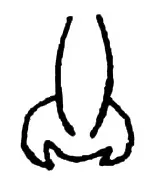
1. Characteristics of a Deer Nose
The defining feature of a deer nose is its small, long shape with a pointed tip. The wings of the nose curve upward, revealing the nostrils.
2. Individuals with a Deer Nose Have Limited Tolerance
A poem from the "Mayi Physiognomy" describes: "A small nose with a pointed tip and exposed nostrils, the left and right wings are tightly bound, making it difficult to preserve inherited wealth, while encountering continuous hardships and misfortune." This means individuals with a deer nose tend to have a small nose and pointed tip, with wings sloping to the sides, exposing the nostrils. They may inherit wealth but find it challenging to maintain, frequently encountering difficulties and adversity. (Note: "left and right wings" refers to the nostrils, while the wings are also known as "golden coffers.")
People with a deer nose typically exhibit coldness and a degree of selfishness, possess weak familial bonds, and have limited tolerance. They often focus on trivial issues, resulting in few friendships and a generally solitary life. However, they are diligent and ambitious, enabling them to gradually resolve financial issues and accumulate some wealth after reaching middle age.