Dreams Fall into Nine Categories, Each with a Unique Meaning: What Have You Dreamed About?
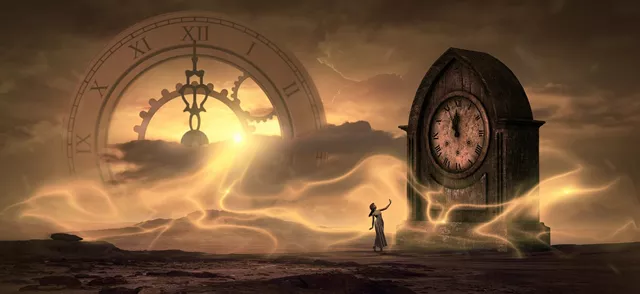
Dreams are both common and unique to each of us, as everyone experiences them. Some dreams can significantly influence our lives and emotional well-being. For example, after a particularly bizarre dream, people often wonder whether it holds any positive or negative implications and what it might mean.
Some dreams bring happiness, while others may leave us feeling uneasy. Throughout history, humans have developed various interpretations and associations with dreams. In ancient times, people saw dreams as mystical omens, believing each dream carried distinct meanings, almost as if they were messages from the universe about one's fate.
This perspective is reflected in traditional culture, where famous anecdotes about dreams exist, such as Zhuang Zhou dreaming he was a butterfly, the dream of Huang Liang, and the dream of Nan Ke. These stories philosophically intertwine dreams with human destiny, as ancient people sought to uncover life's hidden secrets through the realm of dreams.
But what do dreams actually mean? What kind of hints or omens do they provide? After extensive observation and study, ancient scholars compiled "Zhou Gong's Dream Interpretation," which categorizes different dreams and offers interpretations of their positive or negative meanings. By consulting this book, individuals could find interpretations for their dreams. This is why "Zhou Gong's Dream Interpretation" has become widely circulated and remains popular today.
As the saying goes, "Life is like a dream, and dreams are like life." Ancient people realized early on that although dreams are illusory, they share many similarities with real life. What appears imaginary could reflect reality, and real life may be nothing more than a fleeting dream.
The anecdotes of Huang Liang's dream and Nan Ke's dream both depict entire life journeys experienced within a dream. For example, in Huang Liang's dream, a scholar lives through experiences such as marriage, fatherhood, achieving academic success, and gaining official appointments—tangible life experiences that feel real, but upon waking, he realizes it was all just a magnificent dream.
The story of Zhuang Zhou dreaming of a butterfly offers a deeper exploration of the relationship between dreams and reality. After dreaming he was a joyful butterfly, Zhuang Zhou posed a profound philosophical question: "How do I know if I was Zhuang Zhou dreaming I was a butterfly, or a butterfly dreaming I was Zhuang Zhou?" At that moment, he couldn't determine which constituted the real world.
Clearly, there is a strong connection between dreams and reality, with the potential to influence each other. This is why ancient cultures believed dreams held significance. Although dreams can seem strange, "Zhou Gong's Dream Interpretation" provides explanations for any type of dream.
Ancient wisdom suggests, "Dreams come suddenly; they are not without omen." In "Zhou Gong's Dream Interpretation," dreams are classified into nine types:
The first type is called "正梦" (Zheng Meng), referring to dreams that occur during calm, undisturbed sleep. These dreams are typically natural and free of emotional weight.
The second type is "喜梦" (Xi Meng), describing joyful dreams that arise from feelings of happiness or excitement. People often report waking up laughing from such dreams.
The third type is "昼梦" (Zhou Meng), which specifically refers to dreams during daytime naps.
The fourth type is "反梦" (Fan Meng), dreams that are contrary to reality. An example would be dreaming of sadness during a time of real-life joy.
The fifth type is "直梦" (Zhi Meng), direct dreams that manifest precisely in real life. For instance, dreaming of a friend visiting, and then the friend actually arrives.
The sixth type is "性梦" (Xing Meng), influenced by personality and temperament. If someone is angry during the day, they may express anger in their dreams at night.
The seventh type is "噩梦" (E Meng), nightmares induced by extreme fear, which continue to resonate while sleeping.
The eighth type is "人梦" (Ren Meng), correlating with one's identity, status, and profession. For example, a police officer might dream of apprehending criminals or a teacher of conducting a class.
The ninth type is "思梦" (Si Meng), which arises from longing. For instance, missing a departed loved one or distant friend can lead to dreaming about them.
Of course, different texts might categorize dreams differently, including terms like 感梦 (Gan Meng), 时梦 (Shi Meng), 寄梦 (Ji Meng), 转梦 (Zhuan Meng), and 病梦 (Bing Meng), among others. Regardless, ancient cultures believed every dream held a unique meaning. Let’s try to interpret a few simple dreams:
For example, dreaming of clear skies after rain is interpreted in "Zhou Gong's Dream Interpretation" as "Clear skies after rain dispel all worries," indicating good fortune. Conversely, dreaming of a large tree breaking suggests "A large tree breaking suddenly signifies great misfortune," which is unfavorable. Dreams of a broken mirror signify separation. Drinking with others in a dream might lead to arguments...
There are countless expressions of dream interpretation. Those interested can consult "Zhou Gong's Dream Interpretation" to see how accurate the interpretations are. However, it's important to remember the saying, "What one thinks during the day, one dreams at night." We should approach dreams with an objective, rational, and scientific attitude, rather than blindly believing in interpretations. More importantly, we should have dreams and pursue them!