A Math Problem That Helps You "See Through Yourself"
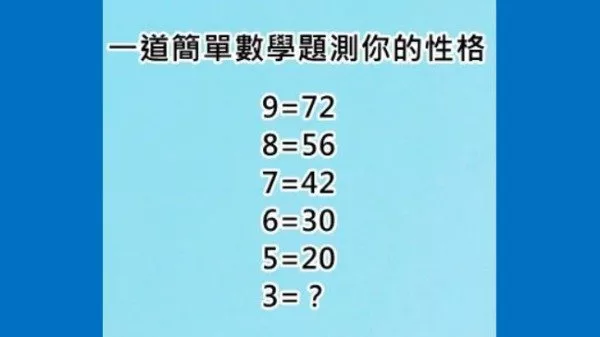
A math problem, reportedly from an international IQ test, has been making the rounds online, claiming that the answer can unveil a person's personality type. Choose your answer:
“A. 6”: Logical Thinker
Logical thinkers possess strong reasoning skills. They think things through carefully before taking action and are well-suited for structured environments. They rarely exhibit the spontaneity often found in artists.
In everyday life, logical thinkers focus on cleanliness and order, sometimes to the point of being obsessive. They are attentive to their family members, contributing to a harmonious home environment. Their meticulous approach to problem-solving earns them the trust of their superiors. They are polite to coworkers and friends and generally get along with everyone. However, their tendency to always be agreeable can sometimes lead to stressful situations.
Logical thinkers may struggle with decisiveness, as overthinking the consequences of their actions can be a stumbling block. They often admire people who succeed through entrepreneurship but find it challenging to take similar risks themselves.
They frequently dwell on their mistakes, not from a pursuit of perfection but due to their serious approach to tasks. This mindset can be both a strength and a source of burnout.
They should relax a bit, lower some standards, and not overly concern themselves with others' opinions. To advance in their careers, it's important to break free from rigid thought patterns. Reading autobiographies of successful individuals can also help them learn decisiveness.
Logical thinkers are ideal for roles in government, businesses, and organizations with well-established systems.
Suitable Careers: Real estate agents, retailers, nurses, stock clerks/purchasers, sports coaches, food service managers, tourism management, banking, insurance, securities.
“B. 9”: Intuitive Thinker
Intuitive thinkers include mystics, dreamers, visionaries, idealists, paranoids, and frustrated geniuses.
Intuitive thinkers are always searching for ways to connect with alternate realities. They often feel detached from everyday life and struggle to articulate their feelings, as understanding the unique world they seem to inhabit can be challenging.
These individuals long to engage in meaningful activities that allow them to freely express their talents. They are unlikely to consider jobs that don't interest them unless the financial reward is significant. Typically, they excel in the arts and literature, thriving in fields like photography, art, performance, and writing. The idea of a 9-to-5 office job, dressing in formal attire for meetings, is often intolerable to them. In corporate settings, they may feel that standardized management stifles their creativity, leading to frequent thoughts of changing jobs.
One challenge for intuitive thinkers is that they can become fixated once they form a preconceived notion about something. Additionally, when passionate about a job or goal, they can become so consumed that they overlook their family's feelings and should pay more attention to personal hygiene.
They are advised to consider their health and family and avoid pouring excessive time and energy solely into their careers.
In social situations, intuitive thinkers can be quite direct, often straying from the main topic in conversations. They are generally tolerant but will voice their opinions without hesitation when challenged, which can sometimes discomfort others.
Suitable Careers: Photographers, designers, stylists, actors, journalists, painters, sculptors.
“C. 12”: Action-Oriented Person
Action-oriented individuals are the champions of entrepreneurship; they see business opportunities in everyday life and are practical doers who trust their judgments once they've made a decision.
They often exude confidence, performing well academically while also being quite mischievous. Although they may not read extensively, their sharp minds help them maintain a solid academic standing. In the workplace, their combination of keen judgment and decisive action usually leads to impressive achievements. When in executive positions, their effective style can significantly boost productivity.
It's crucial to note that their self-confidence can sometimes make it difficult for them to accept advice. Their exceptional performance might provoke envy from colleagues, so learning to modify their approach can help ease interpersonal tensions. While they have faith in their abilities, being open to others' suggestions can further enhance their careers.
Suitable Careers: Account management, magazine editing, television production, marketing, writing, social work, entrepreneurship, and sales.
“D. 30”: Reflective Thinker
Reflective thinkers include philosophers, theoretical mathematicians, existential psychologists, and those who create a perfect reality in their inner worlds. They are indifferent to whether others accept their viewpoints and can appear reserved, as they are not overly concerned with their or others' emotions.
These thinkers typically have a balance between the arts and sciences, although they may lack special talents in artistic or literary fields. When alone, their imagination can run wild; if cultivated properly, their blend of artistic temperament and rational thought can greatly advance their careers. When in management, they are likely to consider their team's input but may lose their initial insights amid various suggestions. Therefore, having a competent assistant can greatly benefit their work. At home, reflective thinkers can balance career and family life well, enjoying a certain lifestyle; even when busy, they make time for leisure and regular outings.
Reflective thinkers often enjoy photography and painting and keep an eye on art exhibits. However, they can become complacent in their careers, content with the status quo. Continued learning is recommended to stay aligned with modern society.
Suitable Careers: Special education teachers, architectural designers, training managers/trainers, career planning consultants, psychological counselors, website editors, writers, arbitrators, curators, hosts.